
Many outdoor enthusiasts, research professionals, and scientific observers struggle with the choice between monoculars and binoculars when purchasing optical equipment. Both are mainstream observation devices on the market, but they differ significantly in observation effects, usage scenarios, features, and target audiences. There’s no absolute “good” or “bad,” only suitability. Yunnan Tengda Optoelectronic Instrument Co., Ltd., located in the Kunming Haikou Optical Industrial Zone, is a professional opto-mechatronics integrated optical instrument manufacturer in Southwest China. Leveraging its own R&D and production workshops, mature optical coating and precision measurement and control technologies, the company focuses on the R&D and production of precision optical instruments such as monoculars, binoculars, and professional birdwatching scopes, and possesses formal import and export qualifications. Today, we’ll provide a comprehensive comparison of the advantages and disadvantages of monoculars and binoculars from a professional perspective to help you accurately choose the observation equipment suitable for your needs.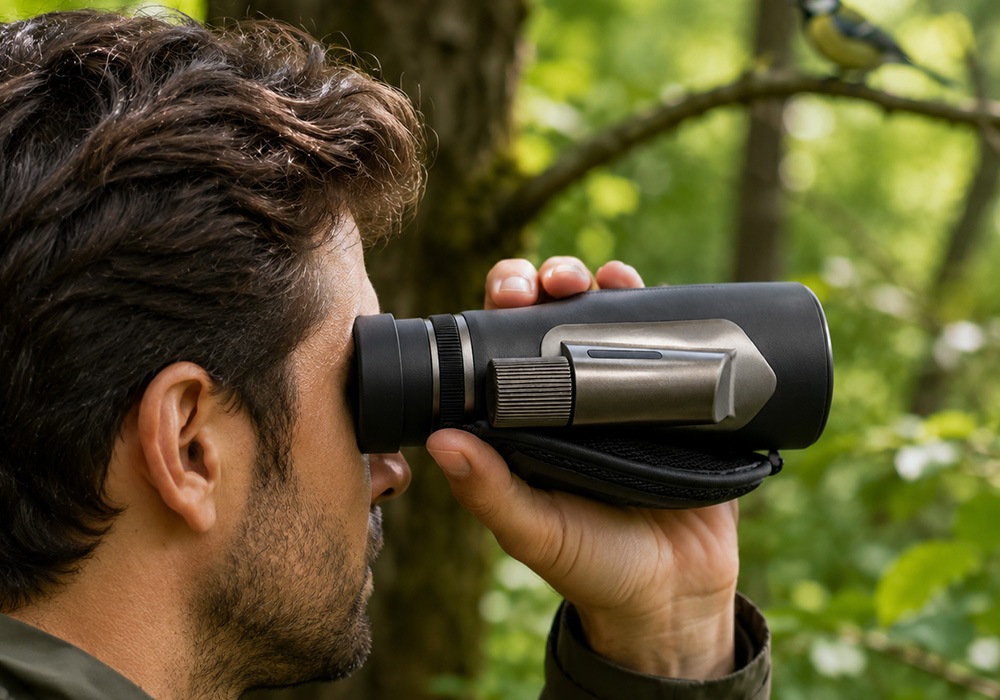
I. Summary of Core Differences Between Monoculars and Binoculars
The biggest differences between monoculars and binoculars lie in their observation structure, magnification performance, and user experience. Monoculars are designed for single-path observation, featuring a more compact and streamlined design, emphasizing high magnification, long-distance observation, and portability. Binoculars, on the other hand, employ dual-path simultaneous observation, offering a wider field of view, more immersive images, and a comfortable grip. They are also easier to use and more suitable for everyday leisure observation. Both products have their core advantages and are suited to completely different usage scenarios; choosing the right one for your needs maximizes the equipment’s value.
II. Advantages, Disadvantages, and Applicable Scenarios of Monoculars
1. Core Advantages
The biggest advantages of monoculars are higher magnification, longer observation distance, and a lighter body. Within the same volume, monoculars can achieve higher magnification zoom, enabling clear observation of distant details at kilometer distances, perfectly meeting the needs of long-distance observation. Their simple and compact structure and lightweight design save space and make them easy to carry, easily fitting into a backpack for outdoor travel. Furthermore, monoculars can be used with a tripod for stable, long-term observation, effectively avoiding hand shake and improving observation accuracy.
In terms of outdoor durability, high-quality monoculars offer superior sealing performance, providing excellent waterproof, fog-proof, and dustproof capabilities. They can withstand complex outdoor environments such as rain, humidity, and dust, are drop-resistant and wear-resistant, and have a longer lifespan. Their cost-effectiveness is outstanding; for the same observation performance, monoculars are more affordable, making them suitable for users who prioritize high-magnification, long-distance observation and portability.
2. Main Disadvantages: Monoculars use a single-eye observation method, which can easily cause eye fatigue during prolonged use. The image is a flat perspective, lacking a sense of depth and immersive viewing experience compared to binoculars, making them unsuitable for extended leisurely sightseeing.
3. Applicable Scenarios: Suitable for outdoor adventures, distant mountain views, sports event observation, security patrols, terrain surveys, field research, and other scenarios requiring long-distance, high-magnification, detailed observation. They are also suitable for lightweight travel, outdoor hiking, and travel photography, and are widely applicable to light professional work scenarios such as engineering monitoring and outdoor inspections.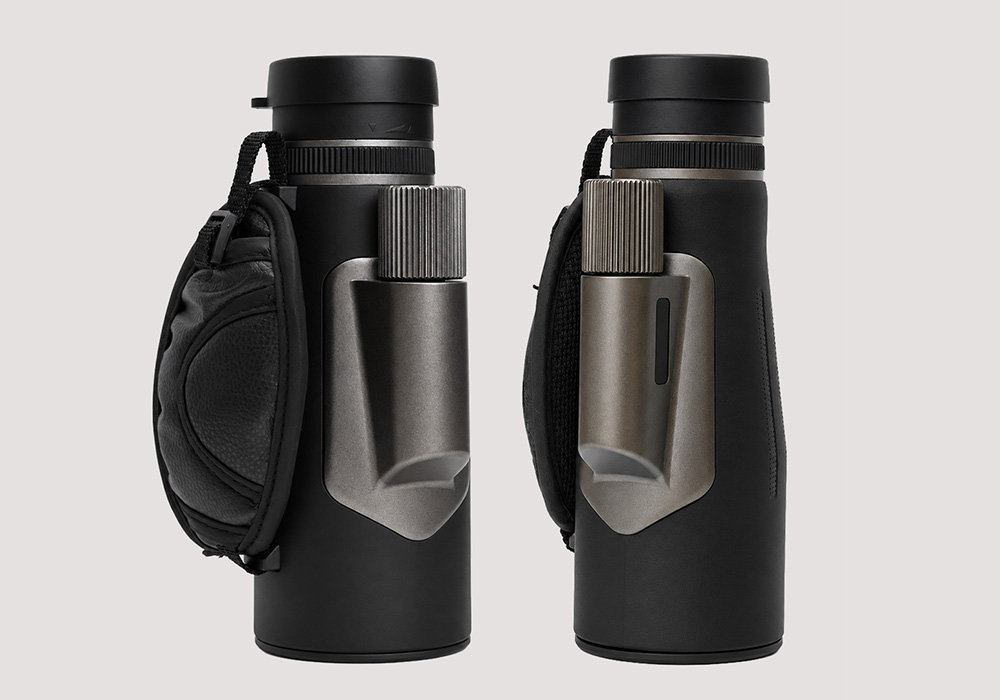
III. Advantages, Disadvantages, and Applicable Scenarios of Binoculars
1. Core Advantages
Binoculars are primarily designed for stereoscopic observation, wide-angle viewing, and comfortable, fatigue-free use. Dual-path synchronous imaging ensures symmetrical and balanced left and right fields of view, producing a rich, three-dimensional image with strong depth and a visual experience more in line with the natural observation habits of the human eye. Long-term observation is effortless and eye-friendly, suitable for all ages. The wide-angle design allows for a wider search range and quick target locking without repeated focus adjustments, making operation simple and accessible.
The ergonomic, non-slip design provides a stable and comfortable grip, enhancing handheld observation stability. It can be easily used without auxiliary supports, making daily operation more convenient. The image is clear and natural with high color fidelity, performing excellently in low-light conditions, providing a superb experience for everyday leisure viewing.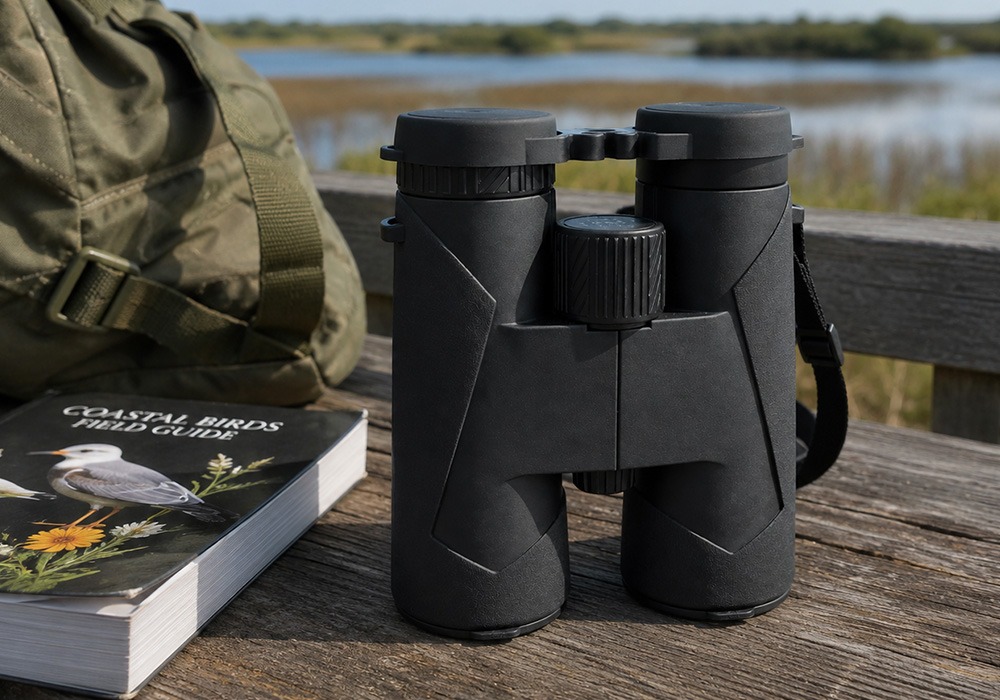
2. Main Disadvantages
Due to structural limitations, binoculars generally have lower magnification, limiting their ability to magnify details at long distances. They cannot achieve ultra-long-distance, high-precision observation, making them unsuitable for professional scientific research, long-distance ecological observation, and other high-precision scenarios. The relatively larger size of the binoculars makes them slightly less portable than monoculars.
3. Applicable Scenarios: Primarily designed for general leisure activities, suitable for outdoor travel, sightseeing, concerts, sports events, family nature tours, outdoor camping, and everyday observation. It’s also a staple optical device for families, educational institutions, and businesses, balancing aesthetics and practicality.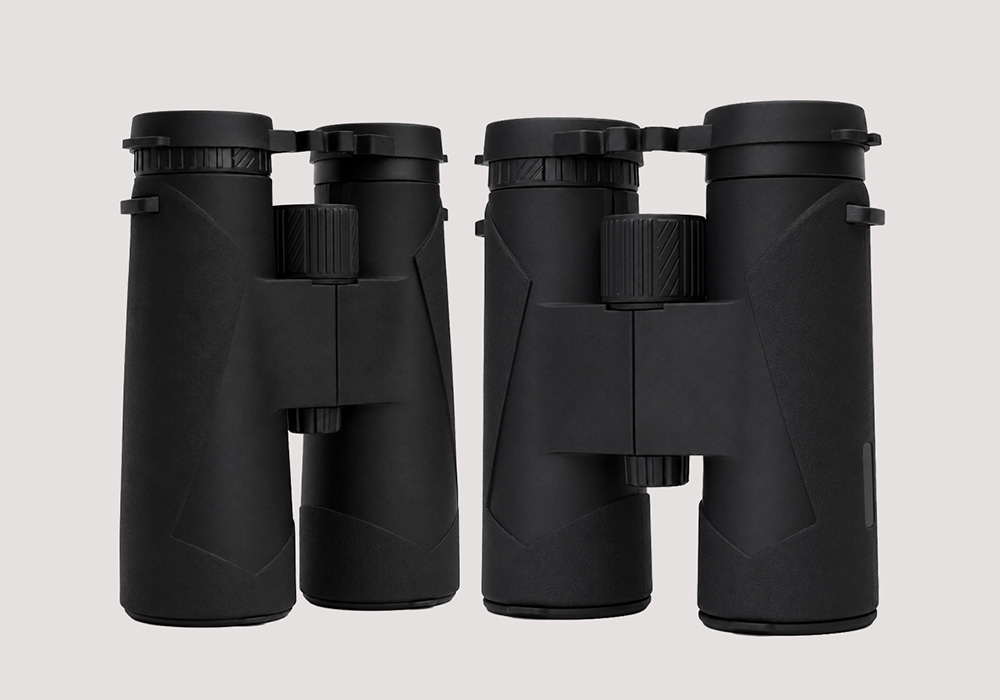
IV. Scenarios-Based Selection Guide: How to Choose Accurately
1. For those seeking long distances, high magnification, detail, and portability: Prioritize monoculars, suitable for outdoor work, scientific research, long-distance sightseeing, and lightweight travel.
2. For those seeking comfortable viewing, immersive viewing, and suitability for all ages: Prioritize binoculars, suitable for family leisure, educational activities, sports events, and everyday outdoor activities.
V. Yunnan Tengda Optoelectronics: A Professional Telescope Manufacturer
Yunnan Tengda Optoelectronics Instrument Co., Ltd. has been deeply involved in the R&D and manufacturing of optical instruments for many years. Leveraging the core advantages of Kunming’s optical industry, it has its own standardized R&D and production workshop, mastering core technologies such as optical coating, precision machining, and automatic focusing and control. Our self-produced monoculars and binoculars all utilize high-definition optical lenses and multi-layer anti-reflective coatings, resulting in high light transmittance, clear imaging, and true-to-life colors. The entire unit undergoes multiple tests for waterproofing, fog resistance, drop and abrasion resistance, and aging stability, ensuring strong outdoor adaptability and stable, reliable quality.
The company possesses formal import and export qualifications, supporting non-standard customization, parameter adjustment, mass production, and full-order supply for foreign trade. We can meet diverse cooperation needs, including individual retail, institutional procurement, engineering support, and foreign trade exports. Whether for leisure sightseeing, outdoor work, or scientific research observation, Tengda Optoelectronics can provide customers with cost-effective and highly adaptable one-stop optical instrument solutions.